In modern-day rapid-paced business environment, a nicely-crafted B2B social media advertising method is a crucial issue for companies aiming to thrive and develop. Leveraging the electricity of social media can set up your brand, interact your audience, and drive tangible outcomes. Here’s a complete guide that will help you construct a triumphing B2B social media strategy.
Table of Contents
ToggleDefining Your Strategy Goals
Account-Based Marketing (ABM): Tailor your social media method to specific high-cost debts. Identify key decision-makers and personalize content material to cope with their pain points, showcasing your answers successfully.
Email Marketing Integration: Seamlessly integrate e mail campaigns with social media efforts to enhance messaging and nurture leads. Use social structures to extend e-mail content material and engage recipients across a couple of touchpoints.
Setting Clear Goals for B2B Social Media
The foundation of an effective B2B social media strategy begins with setting clear and measurable goals. Whether the objective is to increase brand awareness, drive website traffic, or generate qualified leads, having a defined direction ensures that every effort contributes to meaningful outcomes. Without clear goals, social media activities can become scattered and fail to deliver real business impact.
Leveraging Account-Based Marketing (ABM)
A highly effective approach within B2B social media is the integration of Account-Based Marketing (ABM). Instead of targeting a broad audience, ABM focuses on engaging high-value accounts that are more likely to convert. By identifying key decision-makers and tailoring content to address their specific challenges, businesses can create more personalized and impactful campaigns that improve engagement and conversions.
Integrating Email Marketing with Social Media
Aligning email marketing with social media efforts enhances overall effectiveness. Social platforms can amplify email campaigns by promoting newsletters, sharing valuable content, and retargeting users with relevant messaging. This integrated strategy ensures consistent communication across multiple touchpoints and strengthens your B2B social media presence.
Creating Valuable and Data-Driven Content
Content is at the core of any successful strategy. B2B audiences look for informative, solution-oriented content that addresses their business challenges. By leveraging data and audience insights, businesses can create blogs, case studies, and reports that resonate with their target audience while establishing credibility and trust.
Using Visual Storytelling for Better Engagement
Visual storytelling enhances the impact of your B2B social media efforts. Infographics, videos, and visual data help simplify complex ideas and make content more engaging. This not only captures attention but also improves shareability, allowing businesses to reach a wider audience organically.
Building Engagement and Community
Engagement is essential for building strong relationships. Interactive content such as polls, surveys, and discussions encourages participation and provides insights into customer preferences. Actively responding to comments and engaging with your audience helps build trust and long-term connections.
Utilizing LinkedIn and Professional Platforms
Professional platforms like LinkedIn play a crucial role in B2B marketing. By participating in industry groups and sharing valuable insights, businesses can position themselves as thought leaders. This increases visibility and helps attract the right audience within your industry.
Lead Generation and Nurturing Strategies
Generating leads is a key goal of B2B social media, but nurturing those leads is equally important. Using CRM tools to track interactions and segment audiences allows businesses to deliver personalized follow-ups, ensuring that prospects receive relevant information throughout their journey.
Hosting Webinars and Virtual Events
Webinars and virtual events are powerful tools for lead generation and engagement. Promoting these events through social media helps attract a targeted audience while showcasing your expertise. Following up with attendees further strengthens relationships and improves conversion opportunities.
Measuring Performance and Optimizing Strategy
Tracking performance is essential for success. Businesses should monitor key metrics such as engagement rates, click-through rates, and conversions to evaluate their B2B social media efforts. These insights help refine strategies and improve overall effectiveness.
Continuous Improvement Through A/B Testing
A/B testing different content formats, posting times, and messaging helps identify what works best. This data-driven approach allows businesses to continuously optimize their B2B social media strategy and stay relevant in a dynamic digital landscape.
Maintaining Consistency for Long-Term Success
Consistency is key to building a strong presence. Regular posting, a unified brand voice, and ongoing engagement help businesses establish credibility and maintain visibility. Over time, this leads to stronger relationships and sustained growth.
Conclusion
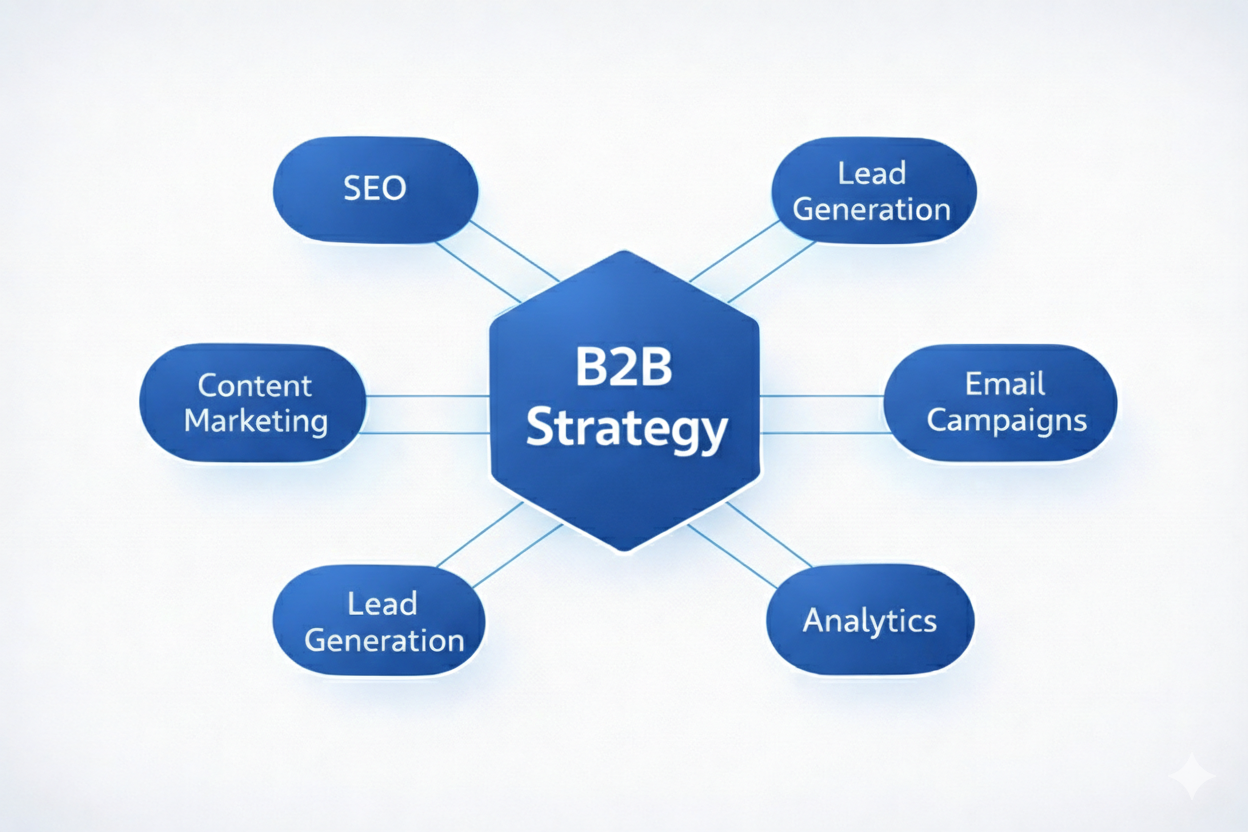
In end, a successful B2B social media advertising and marketing approach requires a mixture of tailor-made content, engagement strategies, and statistics-driven selection-making. By integrating account-primarily based advertising, email marketing, facts management, and lead control, organizations can create a holistic technique that nurtures leads and drives commercial enterprise increase. Remember, building a sturdy social media presence takes time and steady attempt, however the rewards are nicely well worth it.
I hope you find the above content helpful. For more such informative content, please visit PangeaGlobalServices.
FAQs
1. What is B2B social media and why is it important?
B2B social media refers to the use of social platforms by businesses to connect with other businesses, build relationships, and promote their products or services. It is important because it helps brands establish credibility, engage decision-makers, and stay visible in a competitive market. Unlike traditional marketing, it allows direct interaction with prospects and customers. Over time, it becomes a key channel for lead generation and brand positioning.
2. Which platforms work best for B2B social media marketing?
LinkedIn is considered the most effective platform for B2B social media due to its professional user base and targeting capabilities. Platforms like Twitter (X) are useful for sharing updates and industry news, while YouTube works well for educational and video content. The best platform ultimately depends on your audience and content strategy. Businesses should focus on platforms where their target audience is most active and engaged.
3. How can businesses generate leads through B2B social media?
Businesses can generate leads by sharing valuable and gated content such as whitepapers, case studies, and webinars. Running targeted ad campaigns and using strong calls-to-action can also help capture user information. Engaging consistently with prospects and nurturing them through personalized content improves conversion chances. A well-aligned strategy ensures that social media efforts contribute directly to the sales pipeline.
4. What type of content performs best in B2B social media?
Content that educates, informs, and solves business challenges performs best in B2B social media. This includes blogs, industry reports, case studies, and expert insights. Visual content such as infographics and videos also helps simplify complex topics and improve engagement. The key is to focus on delivering value rather than being overly promotional, which builds trust and credibility over time.