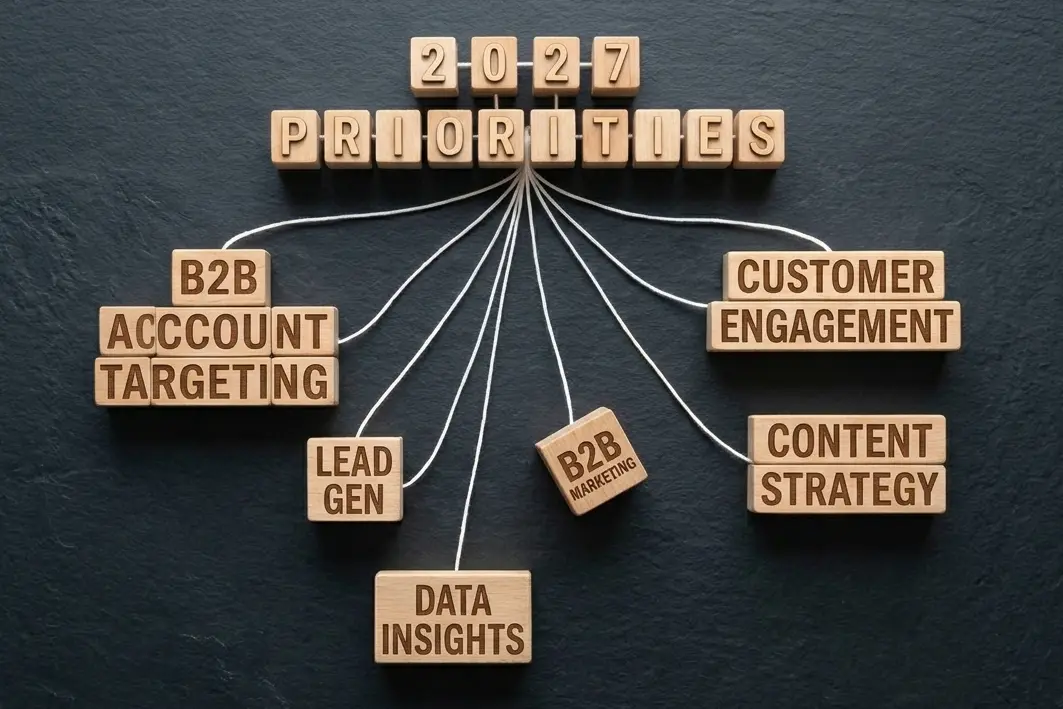
Every planning season brings a fresh wave of B2B marketing predictions, and 2027 is no exception. Artificial intelligence is changing how teams work, budgets remain under pressure, and leadership expects marketing to show a clear line to revenue. Meanwhile, buyers research and shortlist vendors in ways that look very different from even a couple of years ago. The real challenge for most marketing leaders is not a shortage of opinions. It is knowing which shifts deserve real investment and which are noisy. This article outlines the B2B marketing priorities for 2027 that are most likely to shape strategy, and what teams can do about each one.
Table of Contents
ToggleWhy 2027 Planning Looks Different
For years, many marketing teams planned by adjusting the previous year’s budget, adding a little here and trimming a little there. That approach is becoming harder to defend. Buyer behaviour is changing faster than annual plans can track, technology costs are rising, and executives want to see how every dollar contributes to pipeline and revenue. The result is a planning environment that rewards focus. Instead of asking how to do more, successful teams are asking which few things will matter most, and what they are willing to stop doing to make room for them. That mindset runs through each priority below.
Priority 1: Turning AI Adoption into AI Readiness
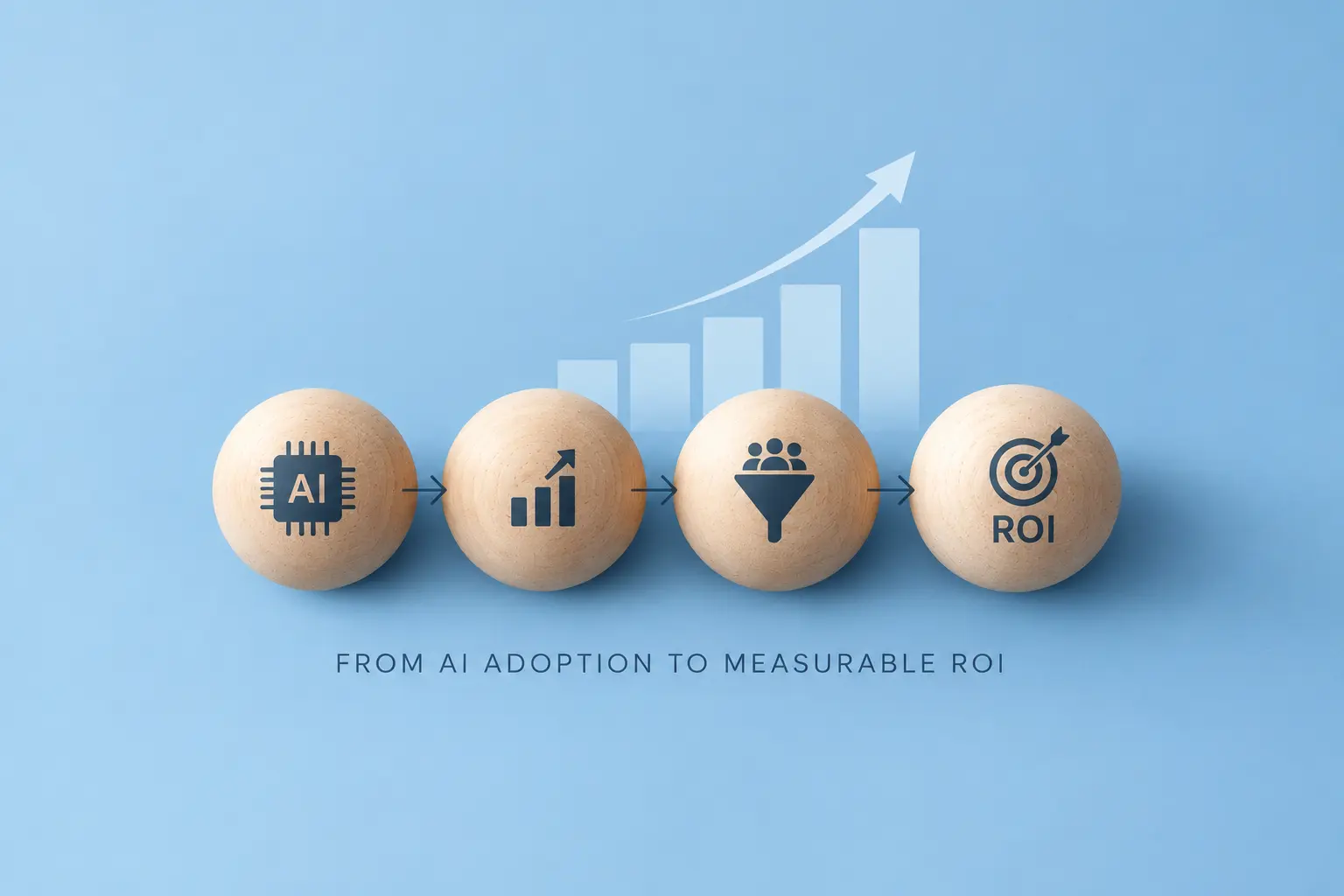
Most B2B marketing teams now use AI in some form, so adoption alone no longer sets a company apart. What separates strong teams from the rest is readiness: a clear understanding of where AI fits, how it is governed, and what results it should produce. Many teams are still using AI in scattered, individual ways, with different people using different tools for different tasks and no shared standards or measurement. That approach tends to produce small time savings but little change in business outcomes.
Closing the gap means moving from tool usage to workflow design. Start by identifying the specific tasks where AI can save time or improve quality, such as research, first drafts, audience analysis, content repurposing, and reporting. Then define what success looks like for each one, whether that is faster turnaround, higher output quality, or better conversion, and measure it. Be careful about launching AI initiatives before the organization is ready, and avoid using AI purely to cut headcount without first redesigning how work gets done, since that often scales inefficiency instead of fixing it. A modest, dedicated experimentation budget helps here, because it makes testing a planned discipline rather than a side project. Training matters just as much. Marketers who understand both the strengths and the limits of these tools will use them with better judgment and more confidence.
Priority 2: Earning Visibility in an AI-Shaped Buying Journey
Buyers are changing how they gather information, and marketing has to follow. Increasingly, people begin their research by asking an AI assistant which vendors to consider and how they compare, and they often prefer to explore on their own before speaking with anyone from sales. In practice, a shortlist can form before a vendor ever learns that a buyer exists. If your company is absent or poorly described in those early answers, you may never get the chance to compete.
At the same time, buyers have not handed their trust over to machines. Most still verify what AI tells them by checking reviews, asking peers, consulting experts, and visiting vendor websites. This means brand credibility has become a visibility strategy. Companies need clear, consistent, well-structured content that AI systems can interpret accurately, along with third-party proof such as customer stories, reviews, awards, expert commentary, and case studies that buyers use to confirm what they have read. It is also worth auditing what AI platforms currently say about your brand. Outdated or inaccurate summaries can shape perception long before any conversation begins, and finding them early gives you time to correct the underlying content.
Priority 3: Lead Quality and the Reality of Large Buying Groups
The move from lead volume to lead quality is closely tied to how complex B2B purchases have become. Most significant business decisions now involve many people, including technical evaluators, finance leaders, procurement teams, and executive sponsors, each with their own concerns and success criteria. Purchases that involve newer technologies tend to draw in even more stakeholders, because they raise additional questions about risk, integration, and value.
For marketers, this changes what a good lead looks like. A single form fill from one contact says little about whether an entire group is moving toward a decision. Content built around one persona or one stage of the funnel will miss many of the people who ultimately approve a purchase. In 2027, stronger programs will map content to the full set of stakeholders and define lead quality using fit, intent, engagement across the account, and sales readiness. Account-level signals, such as multiple people from the same company engaging with your content, will increasingly be better indicators of real pipeline than individual clicks. Teams that adopt this view often generate fewer leads on paper but see higher conversion rates and shorter sales conversations.
Priority 4: Attribution and Revenue Accountability
As marketing budgets grow, so does the pressure to prove impact. Attribution in B2B has never been simple. Long sales cycles, multiple decision-makers, offline conversations, and dozens of touchpoints blur the connection between a single campaign and a closed deal. No attribution model is perfect, so the realistic goal for 2027 is confidence rather than precision.
Teams can make steady progress by agreeing on shared definitions of pipeline and revenue with sales and finance, so that everyone is measuring the same things. Tracking sourced and influenced pipelines side by side gives a fuller picture than either metric alone. Reporting on conversion rates, deal velocity, and pipeline contribution is far more persuasive to leadership than reporting on impressions and clicks. It is also worth guarding against the habit of measuring whatever is easiest to count. Activity metrics can look impressive while hiding weak business results. A smaller set of outcome-based metrics, reviewed consistently and discussed openly with leadership, will serve planning conversations far better than a dashboard crowded with vanity numbers.
Priority 5: Fewer, Bigger Bets in Budget Planning
Budget planning for 2027 rewards discipline over breadth. Rather than spreading increases evenly across every channel and team, high-performing marketing leaders are making deliberate bets tied directly to business priorities. That means concentrating investment where it is most likely to influence the pipeline, expanding what is clearly working, and being willing to stop funding what is not.
Several areas deserve consideration. Visibility in AI-driven research is one, as discussed above. Continuous market and competitive intelligence is another, because buyer expectations and competitor positioning are shifting quickly. AI-enabled workflows that free up time for higher-value work are a third. Finally, tighter integration of brand and demand programs deserves attention. Brand and demand have long been managed with separate budgets and separate success measures, yet buyers who already trust a company tend to shortlist it more often and move through the process faster. Treating the two as one connected system helps explain why some campaigns perform better than their click data suggests. For most teams, the practical exercise is to list every program, identify which ones demonstrably influence the pipeline, and make a clear decision about the rest. Stopping a low-impact program is not a loss. It is what creates the budget and capacity for stronger ones.
Priority 6: Sales and Marketing Alignment as an Operating Model
None of the priorities above works well without alignment between sales and marketing. Companies with strong alignment generally see better results, yet many still struggle with shared goals, connected reporting, and visibility across the full journey from first touch to closed revenue. As buying groups grow and sales cycles lengthen, the handoffs between the two teams matter more than ever.
Alignment becomes real when it is built into how teams work. Shared account lists ensure both teams focus on the same companies. Agreed definitions of lead quality prevent disputes about what counts as sales-ready. Joint pipeline reviews keep both sides accountable for the same outcomes. Feedback loops from sales conversations back into messaging help marketing address the questions buyers actually ask. When these practices are in place, alignment stops being a slogan and becomes an operating model that supports every other priority on this list.
Conclusion
The common thread across all of these priorities is focus. B2B marketers in 2027 will not succeed by doing more. They will succeed by choosing priorities deliberately, building AI into redesigned workflows, earning trust where buyers actually research, measuring outcomes that leadership recognizes, and working in step with sales. Comparing your own budget, AI maturity, and challenges with those of similar companies can add useful context, and revisiting your plan quarterly keeps it responsive as conditions change. Teams that make these choices early will enter the year with a clearer plan, stronger evidence for every decision, and a better chance of turning marketing activity into measurable growth.
I hope you find the above content helpful. For more such informative content, please visit PangeaGlobalServices.
FAQs:
1. What are the top B2B marketing priorities for 2027?
The top priorities are making AI deliver real results, earning visibility in AI-driven buyer research, improving lead quality, strengthening attribution, and focusing budgets. Closer sales and marketing alignment supports all of them.
2. How is AI changing B2B marketing and buyer behavior?
Most marketers now use AI, but many still struggle to see big gains. Buyers also use AI to build shortlists early, then check its answers with peers, reviews, and experts.
3. Why is lead quality becoming more important than lead volume?
B2B purchases involve large buying groups, so one form fill rarely means a ready buyer. Quality leads convert better and add more to pipeline than sheer volume.
4. How can B2B marketers improve attribution and prove ROI?
Agree on shared pipeline and revenue definitions with sales and finance. Then track outcomes like conversion rates and deal velocity instead of clicks and impressions.
5. How should B2B teams approach budget planning for 2027?
Make a few focused bets tied to business priorities instead of spreading funds evenly. Stop funding programs that don’t influence pipeline, and keep a small budget for testing new ideas.